August 1920
The Hefner Killing
A fugitive named Walter Tunif shot Sheriff Orlie Hefner during a visit to a ranch in [Finney County](entity:location-recall-location-b3289f27c725). A local posse caught Tunif the next morning and killed him with gunfire.
The old case later serves as a measure of how exceptional the Clutter murders seem to the community: Finney County had known violence, but nothing comparable to the terror and uncertainty now spreading through it.
1934–1948
The Clutter Farm Takes Shape
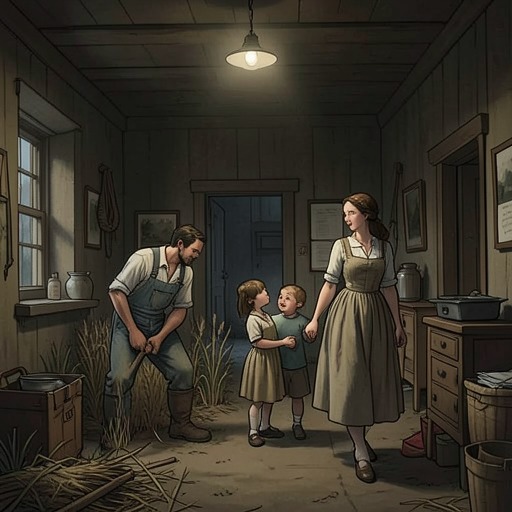
After marrying [Bonnie Clutter](entity:character-recall-character-bonnie-clutter-a2c090624495), [Herbert William Clutter](entity:character-recall-character-herbert-william-clu-535e3f9006d0) moved with her to [Garden City](entity:location-recall-location-garden-city-786f9768cfc7) and built his career in agricultural service. He eventually left government work to establish [River Valley Farm](entity:location-recall-location-river-valley-farm-a0f9547efb52), growing it into a prosperous operation through persistence and modern farming methods.
The farm and its successful, well-regarded household embodied the security that their neighbors valued. Herbert and Bonnie Clutter raised four children, while Bonnie’s recurring depression increasingly pulled her away from family and social life.
1928–1935
Perry’s Restless Childhood
[Perry Smith](entity:character-recall-character-perry-smith-6cc916ca0ee9) was born to rodeo performers [Florence Buckskin](entity:character-recall-character-florence-buckskin-5568961079b1) and [Tex John Smith](entity:character-recall-character-tex-john-smith-313afc51a42c). His early memories included the spectacle of his parents riding, but their marriage deteriorated, his mother began drinking heavily, and she eventually left with the children.
The family’s instability and poverty unsettled Perry’s childhood. He repeatedly ran away hoping to find his father, while his mother’s drinking and the children’s uncertain care left him angry, frightened, and increasingly distrustful.
Mid-1930s
Abuse in the Institutions
After his parents separated, Perry was sent to a Catholic orphanage and then to a [Salvation Army](entity:organization-recall-organization-salvation-army-2702293c985d) children’s shelter. He wet the bed and was beaten, humiliated, and punished with cold water by adults responsible for his care.
The cruelty left lasting hostility toward religious institutions and authority figures. In his recurring dreams, a gigantic yellow bird came to avenge him and carry him away to safety—a private refuge that would remain part of his imagination throughout his life.
Late 1930s–1945
Life on the Road with Tex
After reuniting with [Tex John Smith](entity:character-recall-character-tex-john-smith-313afc51a42c), Perry spent years traveling with his father through the West and [Alaska](entity:location-recall-location-b2c21cbab16e). Tex taught him outdoor skills and prospecting, but their close, self-contained life also left Perry feeling unseen in his musical, artistic, and intellectual interests.
As a teenager Perry joined the [United States Merchant Marine](entity:organization-recall-organization-united-states-me-1331260ecc34) and later the Army. He served in the [Korean War](entity:time-recall-time-284e7f44d75e), earned a Bronze Star, and continued to carry the conviction that he was talented but denied the education and recognition he deserved.
1952
The Motorcycle Accident
After leaving the Army, Perry rode toward [Alaska](entity:location-recall-location-b2c21cbab16e) to rejoin his father, but a motorcycle crash near [Bellingham](entity:location-recall-location-895e2984ead1) shattered his legs. He spent months in hospital and on crutches, and chronic pain later drove him to rely heavily on aspirin.
The injuries limited the kind of manual work he had hoped to do and deepened his sense that his future had been taken from him. His small, damaged legs became a visible reminder of the accident and a source of shame.
1953–1955
The Failed Lodge
Perry joined [Tex John Smith](entity:character-recall-character-tex-john-smith-313afc51a42c) in building [Trapper’s Den Lodge](entity:location-recall-location-ec0fb69d0f7d) in [Alaska](entity:location-recall-location-b2c21cbab16e), a large hunting lodge they hoped would make them prosperous. Tourists rarely stayed, the money ran out, and the strain of failure turned their relationship bitter.
During a quarrel over food, Perry nearly strangled his father. Tex threatened him with a gun that was not loaded, then locked him out of the lodge and left his belongings in the snow. Perry walked away with his guitar, without money, and the two separated.
1955–1956
The Phillipsburg Burglary
Traveling east in search of work, Perry joined an acquaintance in burglarizing a business in [Phillipsburg](entity:location-recall-location-4b147603281d), [Kansas](entity:location-recall-location-kansas-de2a58274d0b). They were caught after a traffic stop in Missouri, escaped from a local jail, and stole a car before eventually separating.
Federal authorities arrested Perry in New York and returned him to Kansas. He was sentenced to prison for burglary and related offenses, beginning the incarceration that would bring him into contact with both [Willie-Jay](entity:character-recall-character-willie-jay-b36096476c20) and [Dick](entity:character-recall-character-dick-aa8333e129bc).
During Perry’s first years in prison
Perry Meets Willie-Jay
At [Kansas State Penitentiary](entity:location-recall-location-kansas-state-peniten-615acd65b4bf), Perry befriended [Willie-Jay](entity:character-recall-character-willie-jay-b36096476c20), a prison chaplain’s clerk who saw artistic promise in the guarded, physically powerful prisoner. Willie-Jay encouraged Perry’s interest in faith and took his drawings seriously, but Perry ultimately rejected the religious beliefs that had drawn them together.
Before Perry’s parole, Willie-Jay warned him that his explosive anger and contempt for others could become destructive. Perry valued the letter and Willie-Jay’s recognition of him, but did not accept the warning as a reason to change his course.
Late 1940s–1958
Dick’s Early Troubles
[Richard Eugene Hickock](entity:character-recall-character-richard-eugene-hick-408819ee31b7) was an athletic, intelligent young man who wanted to study engineering but lacked the money for college. He married [Carol Hickock](entity:character-recall-character-carol-hickock-362581a9fbed) young, had three sons, and accumulated debt while moving through jobs as a mechanic, car painter, and ambulance driver.
After a serious car accident, he began gambling, writing bad checks, and committing thefts; his marriages failed and he was sent to prison. His parents believed the accident changed him, though his criminal behavior had begun before it.
1959, during Dick’s final prison months
Wells Describes the Clutters
While imprisoned with [Floyd Wells](entity:character-recall-character-floyd-wells-45492126c342), [Dick](entity:character-recall-character-dick-aa8333e129bc) learned that Wells had once worked at [River Valley Farm](entity:location-recall-location-river-valley-farm-a0f9547efb52). Wells described [Herbert William Clutter](entity:character-recall-character-herbert-william-clu-535e3f9006d0) as wealthy and mentioned what he believed was a safe in the house.
Dick kept asking about the family, the layout of the home, and the amount of money there. He told Wells that he and a partner would rob the farm and leave no witnesses, though Wells assumed the talk was prison boasting and did not alert anyone.
July 6, 1959
Perry Leaves Prison
Perry was paroled on the condition that he stay out of [Kansas](entity:location-recall-location-kansas-de2a58274d0b). He drifted through the West, taking temporary work and carrying his maps, books, letters, and dreams of treasure hunting.
A letter from [Dick](entity:character-recall-character-dick-aa8333e129bc) proposing a lucrative score drew Perry back toward Kansas. Perry’s deeper hope was to reunite with [Willie-Jay](entity:character-recall-character-willie-jay-b36096476c20), who was also due for release, but he reached [Kansas City](entity:location-recall-location-kansas-city-f07d76732ba9) after Willie-Jay had already left for the East.
Autumn 1959
Dick Wins Perry’s Confidence
Perry met [Dick](entity:character-recall-character-dick-aa8333e129bc) in [Kansas](entity:location-recall-location-kansas-de2a58274d0b) and stayed at a hotel rather than in Dick’s parents’ home, where his prison connection made him unwelcome. Dick described a plan to rob a wealthy Kansas farmer and persuaded Perry that they could use the proceeds to begin a new life in [Mexico](entity:location-recall-location-mexico-6f79111cb935).
Perry liked Dick’s apparent practicality and masculine confidence, while Dick saw Perry as a potentially useful partner. Their shared fantasies of travel and treasure hunting concealed a mismatch: Dick wanted immediate money and control, while Perry wanted both adventure and a companion who seemed to understand him.
Early to mid-November 1959
Herbert’s Final Days
At [River Valley Farm](entity:location-recall-location-river-valley-farm-a0f9547efb52), [Herbert William Clutter](entity:character-recall-character-herbert-william-clu-535e3f9006d0) continued to manage his prosperous operation and take part in community life. His wife, [Bonnie Clutter](entity:character-recall-character-bonnie-clutter-a2c090624495), had returned from treatment believing that a spinal problem explained her depression and that an operation might restore her health.
The family was making plans for [Thanksgiving](entity:time-recall-time-thanksgiving-060be728c565) and [Beverly Clutter](entity:character-recall-character-beverly-clutter-8ffd35d12a7c)’s wedding. Herbert’s confidence in the farm and his affection for his family made the ordinary preparations especially poignant in retrospect.
Friday, November 13, 1959
The School Play and Late Date
Bonnie briefly joined Herbert at the [Holcomb](entity:location-recall-location-holcomb-ae2a6d347db1) School for a student production of Tom Sawyer, in which [Nancy Clutter](entity:character-recall-character-nancy-clutter-f4a1c1fcee14) played Becky Thatcher. Nancy then persuaded her father to let her attend a late show in [Garden City](entity:location-recall-location-garden-city-786f9768cfc7) with friends, returning home close to two in the morning.
Herbert reprimanded her less for the late hour than for her steady relationship with [Bobby Rupp](entity:character-recall-character-bobby-rupp-db7963673d80). He believed their different religious backgrounds made marriage impossible and asked Nancy to begin gradually ending the relationship, leaving her torn between pleasing her father and staying close to Bobby.
Saturday, November 14, 1959, morning
Nancy’s Busy Saturday
Nancy spent the morning teaching Jolene Katz to bake a cherry pie, then hurried through errands and other commitments. Bonnie, feeling unwell, declined the pie and spoke with the girl about the small keepsakes she treasured and the importance of carrying something of one’s own wherever life led.
Nancy later told [Susan Kidwell](entity:character-recall-character-susan-kidwell-1081c79f5679) that Herbert seemed unusually worried and that she kept smelling cigarette smoke in the house. The family was not given to smoking, and Nancy could not explain the odor or her father’s recent mood.
Saturday, November 14, 1959, morning and afternoon
Perry and Dick Prepare
In [Olathe](entity:location-recall-location-e6ace9ea90d5), [Dick](entity:character-recall-character-dick-aa8333e129bc) took the black 1949 Chevrolet to the garage where he worked and prepared it for the long drive. He had secretly taken his shotgun from his parents’ home, while Perry checked his guitar and the other equipment in the car.
In Emporia they bought rubber gloves and a hundred yards of white nylon cord. Perry argued for dark stockings to disguise their faces, but Dick dismissed the precaution, insisting that there would be no witnesses and that his plan was foolproof.
Saturday, November 14, 1959, evening
The Clutters’ Ordinary Evening
[Bobby Rupp](entity:character-recall-character-bobby-rupp-db7963673d80) arrived at [River Valley Farm](entity:location-recall-location-river-valley-farm-a0f9547efb52) and spent the evening with Nancy, Kenyon, and Herbert. They watched television, talked, and quibbled as they often did; Herbert read while the teenagers sat together, and the family’s evening passed without any apparent disturbance.
Bobby left around half past ten after making plans to see Nancy the next night. [Alfred Stoecklein](entity:character-recall-character-alfred-stoecklein-b5356c44afdf) heard the car depart and assumed it was Bobby’s. No one in the house knew that strangers were waiting nearby or that this would be the last ordinary evening the family shared.
Late Saturday, November 14, 1959
The Drive to Holcomb
After dinner in Great Bend, [Dick](entity:character-recall-character-dick-aa8333e129bc) and Perry continued west across the [Kansas](entity:location-recall-location-kansas-de2a58274d0b) plains. They stopped for gas near [Garden City](entity:location-recall-location-garden-city-786f9768cfc7), where Perry struggled with his painful legs and a torn rubber glove, then drove on beneath a bright full moon.
Dick navigated by the details he had learned from [Floyd Wells](entity:character-recall-character-floyd-wells-45492126c342) and by a diagram of the farm. The men reached [River Valley Farm](entity:location-recall-location-river-valley-farm-a0f9547efb52) shortly after midnight, confident that the house contained a safe and large amounts of cash.
After midnight, November 15, 1959
The Safe Is Missing
[Dick](entity:character-recall-character-dick-aa8333e129bc) and Perry entered the unlocked [Clutter family home](entity:location-recall-location-clutter-family-home-2fa236ffa114) and searched Herbert’s office for the safe described by [Floyd Wells](entity:character-recall-character-floyd-wells-45492126c342). They found no safe. Herbert insisted he had no hidden cash and offered to write a check, but Dick refused to accept the truth and grew angry.
Perry cut the telephone lines and discovered that someone upstairs had awakened. The false information about the safe had turned a planned robbery into a dangerous standoff inside a home whose occupants had done nothing to provoke the intruders.
Early hours of November 15, 1959
The Family Is Bound
The intruders brought Bonnie, Nancy, and Kenyon out of their rooms and confined them with Herbert. Perry restrained and gagged the family with cord and tape, while [Dick](entity:character-recall-character-dick-aa8333e129bc) searched the house for money and continued to demand a safe that did not exist.
Perry tried to treat the captives with some consideration, placing a chair in the bathroom for Bonnie and allowing Kenyon to dress. Nancy was already awake and dressed when she appeared, trying to meet the strange situation with a smile. Her composed kindness made her especially vivid to Perry as the night wore on.
During the Clutter home invasion
Dick Threatens Nancy
While Perry restrained Nancy, he talked with her about school, horses, and her plans to study art and music. He learned that she had a boyfriend and listened as she tried to remain friendly despite her fear.
[Dick](entity:character-recall-character-dick-aa8333e129bc) announced that he intended to rape her. Perry threatened to fight him if he touched her, and Dick backed down. The exchange exposes the volatile partnership beneath their shared crime: Perry could be capable of murder and still draw a line at Dick’s sexual violence.
Early morning, November 15, 1959
The Clutter Family Murders
After the house had been searched and the family bound, Perry and [Dick](entity:character-recall-character-dick-aa8333e129bc) led Herbert to the basement. Perry placed a mattress box under him and tied Kenyon to a couch, even putting a pillow beneath the boy’s head. The killers then shot the four members of the family in separate parts of the house.
Perry later described killing Herbert with a knife and then a shotgun, while the accounts of who fired at the other victims initially differed. The murders took place without the cash the men had expected; their eventual take was only a few small items and roughly forty to fifty dollars.
Before dawn, November 15, 1959
The Killers Leave the Farm
Perry and [Dick](entity:character-recall-character-dick-aa8333e129bc) collected the spent shells and left [River Valley Farm](entity:location-recall-location-river-valley-farm-a0f9547efb52) in the Chevrolet. They drove away with binoculars and a portable radio, then stopped on the prairie to wash blood from the gun and bury shells, cord, and tape.
They burned bloody clothing and gloves at a roadside rest area before Dick returned to [Olathe](entity:location-recall-location-e6ace9ea90d5) for Sunday dinner and Perry went back to his hotel. Their attempt to erase the evidence appeared successful, and each man resumed an ordinary-looking routine.
Sunday morning, November 15, 1959
The Bodies Are Discovered
[Nancy Ewalt](entity:character-recall-character-nancy-ewalt-6b6e46b018a9) and [Susan Kidwell](entity:character-recall-character-susan-kidwell-1081c79f5679) arrived at [River Valley Farm](entity:location-recall-location-river-valley-farm-a0f9547efb52) expecting to join the family for church. When repeated knocks went unanswered, they entered through the kitchen and found [Nancy Clutter](entity:character-recall-character-nancy-clutter-f4a1c1fcee14) dead in her bedroom; Susan fled in shock, while Nancy Ewalt told her father what they had seen.
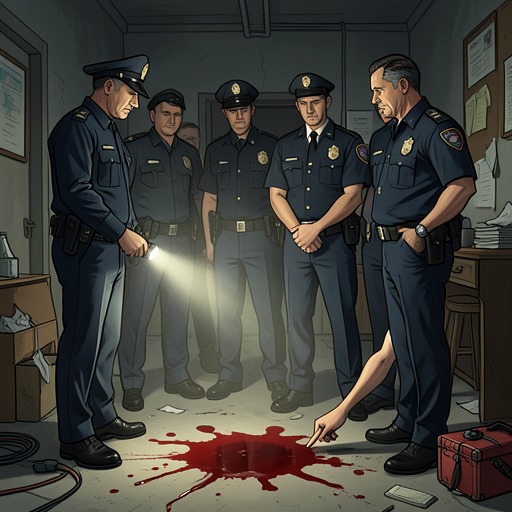
Sheriff [Earl Robinson](entity:character-recall-character-earl-robinson-2eef44be48e5) and others entered the house and found Bonnie, Kenyon, and Herbert dead as well. The discovery transformed a quiet Sunday into a public catastrophe and began an investigation with no clear motive or immediate suspect.
November 15, 1959, after the discovery
Holcomb’s Fear Takes Hold
News of the killings spread through [Holcomb](entity:location-recall-location-holcomb-ae2a6d347db1) and [Garden City](entity:location-recall-location-garden-city-786f9768cfc7). Neighbors who had rarely locked their doors began securing their homes, while rumors and fear turned familiar faces into possible suspects.
[Bobby Rupp](entity:character-recall-character-bobby-rupp-db7963673d80), who had been the last known visitor to the Clutter home, was questioned and briefly treated as a suspect. [Susan Kidwell](entity:character-recall-character-susan-kidwell-1081c79f5679) grieved beside him, and the community struggled with the possibility that the crime had been committed by someone nearby.
November 18–23, 1959
The Funeral and the Wedding
A thousand people attended the funeral for Herbert, Bonnie, Nancy, and [Kenyon Clutter](entity:character-recall-character-kenyon-clutter-1f4ba2c628c1). Their bodies were buried together after a week of shock, sorrow, and speculation; Bobby and Susan were among those devastated by Nancy’s death.
Soon afterward, [Beverly Clutter](entity:character-recall-character-beverly-clutter-8ffd35d12a7c) married her fiancé earlier than planned because relatives had gathered for the tragedy. Bonnie’s brother urged the community to reject vengeance and pray for the killers, even as many residents privately demanded that they be hanged.
November 16, 1959, onward
Dewey Takes the Case
[Alvin Adams Dewey](entity:character-recall-character-alvin-adams-dewey-e7f2b9b0b08f) of the [Kansas Bureau of Investigation](entity:organization-recall-organization-kansas-bureau-of-950000032a4a) took charge of the investigation. A friend of Herbert and Bonnie, he considered the case personal and vowed to discover who had entered the house and why.
Dewey and his colleagues debated whether one or two killers had acted, considered possible grudges and robbery, and examined the crime scene for overlooked clues. Footprints photographed on the basement cardboard and a distinctive half-sole impression became the most promising physical evidence.
Late November 1959
The First Suspects Fail
Investigators pursued local men with possible grudges against Herbert, including a father and son who had once argued with him and a farmer who believed Herbert had killed his dog. Both leads collapsed when the suspects established alibis or investigators found no supporting evidence.
Bobby also took a lie-detector test and was eliminated. With no clear trail, the inquiry widened to former farm employees, family acquaintances, and anyone who might explain the strange violence.
December 1959
Adrian Enters the House
[Paul Helm](entity:character-recall-character-paul-helm-2b1f244464ad) saw a person inside the locked Clutter house and alerted the authorities. The man, Jonathan Daniel Adrian, had entered through a well passage because he was curious about the murder scene.
He carried a shotgun and hunting knife in his car, so investigators briefly feared they had found the killer. They soon concluded that his intrusion was an unrelated act of curiosity, another false lead in a case still without a solution.
November 20, 1959
Perry and Dick Loot Kansas City
In the [Kansas City](entity:location-recall-location-kansas-city-f07d76732ba9) metropolitan area, [Dick](entity:character-recall-character-dick-aa8333e129bc) came up with a story about an upcoming wedding, using forged checks to buy clothes, jewelry, cameras, and televisions. Perry, as a silent partner, accompanied him and helped take the purchased items to a pawnshop to turn them into cash
November 21–23, 1959
The Men Reach Mexico
Perry and [Dick](entity:character-recall-character-dick-aa8333e129bc) drove out of the [Kansas City](entity:location-recall-location-kansas-city-f07d76732ba9) metropolitan area in that old full-loaded Chevrolet, carrying stolen goods, as well as books and documents that Perry valued. They crossed into [Mexico](entity:location-recall-location-mexico-6f79111cb935) at [Laredo](entity:location-recall-location-4bef96e6b74e), heading south, stopping briefly in [Mexico City](entity:location-recall-location-mexico-city-78f19f654410) at Smith and Hickok's store to sell the
Late November 1959
Perry Fears What They Did
During a stop in [Mexico](entity:location-recall-location-mexico-6f79111cb935), Perry told [Dick](entity:character-recall-character-dick-aa8333e129bc) that they killed the Crater family, definitely something was wrong with him. He worried they couldn't possibly escape responsibility, but Dick insisted he was normal and planned everything perfectly
Late November–early December 1959
The Mexico Dream Collapses
Perri and [Dick](entity:character-recall-character-dick-aa8333e129bc) met a German vacationer named Otto in [Acapulco](entity:location-recall-location-b1866b56baa5), where they boarded the "[Estrellita](entity:object-recall-object-estrellita-87f0169fdc8b)" to go fishing. They spent several days together. At one point, Perri felt that their shared life had finally become the adventure he longed for; catching a sail
Early December 1959
The Family Histories Resurface
As Perry was preparing to leave [Mexico City](entity:location-recall-location-mexico-city-78f19f654410) to buy a radio from the Crater family, he re-read the documents left behind, including his father's writings about his childhood and letters from his sister [Barbara Johnson](entity:character-recall-character-barbara-johnson-4aab07b499a9). [Tex John Smith](entity:character-recall-character-tex-john-smith-313afc51a42c) remembered Perry as both talented and emotionally sensitive; Barbara urged him to take responsibility
December 1959, after the return to the United States
The Bell Attack Is Interrupted
After returning to the United States, Perry and [Dick](entity:character-recall-character-dick-aa8333e129bc) were in financial difficulty and waited by the side of the road for a wealthy lone traveler to rob. They got into the car of travel salesman Mr. Bell and planned to attack him while he was driving. Just as Dick gave the agreed signal, a
November–December 1959
Wells Reports the Plot
Freud Wells heard a radio report about the murder of the Kratt family, recognized the family, and also recognized the method of the crime that [Dick](entity:character-recall-character-dick-aa8333e129bc) had described in prison. Because of fear of retaliation and concern that he might be sued, he remained silent for several weeks, until another prisoner encouraged him
December 1959
The Search Reaches the Families
[Harold Nye](entity:character-recall-character-harold-nye-ee0a061ea9e0) followed the clues to [Dick](entity:character-recall-character-dick-aa8333e129bc)'s family and learned that Dick disappeared after spending some time with Perry. Dick's parents told him that Dick lied about going on a trip to Fortescue. They remembered that after returning home on the Sunday following the murder, Dick's appetite and sleep schedule
December 1959
Perry’s Box Reveals the Boots
In [Las Vegas, Nevada](entity:location-recall-location-las-vegas-nevada-8d0bde228292), Neil found a box that Perry had left at the apartment landlord's house. The box contained personal items, including two pairs of boots, one pair with a Kate Pate sole, and another with a diamond pattern, matching the footprints taken at the Valley Farm scene
December 1959
The Clutter Radio Is Traced
Du Wei learned that Nancy's watch had been hidden in a shoe, while Kenyon's Zenith portable radio was missing. He was still unsure whether the family was killed for money, but the missing items increased the possibility of a robbery murder. Later, investigators followed the radio's trail to [Mexico City](entity:location-recall-location-mexico-city-78f19f654410)
December 19–25, 1959
The Florida Murders Raise Doubts
When Perry was at [Miami Beach](entity:location-recall-location-08baa8c7f400), he read the news that the Walker family had been shot dead on a ranch in [Florida](entity:location-recall-location-florida-1618e1042117). He wondered if there was an imitator who had followed the crime in [Kansas](entity:location-recall-location-kansas-de2a58274d0b). [Dick](entity:character-recall-character-dick-aa8333e129bc) confirmed that the night of the murder, they had been near [Tallahassee](entity:location-recall-location-c0e81812488a)
December 1959
Dewey’s Investigation Exhausts Him
This investigation nearly drained [Alvin Adams Dewey](entity:character-recall-character-alvin-adams-dewey-e7f2b9b0b08f). He and his colleagues checked hundreds of clues, but Dewey's health was deteriorating, and the murder case was taking over his family life. He repeatedly returned to the Kratt house, trying to imagine the long time the killer spent inside the
Late December 1959
Dick and Perry Return to Kansas City
After having very little money left, [Dick](entity:character-recall-character-dick-aa8333e129bc) persuaded Perry to return to the [Kansas City](entity:location-recall-location-kansas-city-f07d76732ba9) metropolitan area to write more checks, despite Perry's concern that the police were about to catch them. They stole a Chevrolet in [Iowa](entity:location-recall-location-c9282a2c542a) and drove in the rain toward the city
Late December 1959
The Suspects Are Spotted
[Dick](entity:character-recall-character-dick-aa8333e129bc) spent recklessly, drawing the attention of the police to the stolen car. The authorities began to keep an eye on him and Perry. Before they were captured, they had briefly hidden in the [Kansas City](entity:location-recall-location-kansas-city-f07d76732ba9) metropolitan area, continuing their escape, which made Dwyer more worried that they seemed unstoppable and
Late December 1959
The Roadside Strangers
[Dick](entity:character-recall-character-dick-aa8333e129bc) and Perry, who were financially strained, took a boy named Bill and his sick grandfather on a trip to [Texas](entity:location-recall-location-texas-f19b16f8e87c) to visit relatives. Perry saw his childhood in the boy and would not let Dick leave the grandfather and the boy stranded on the side of the road
December 30, 1959
The Fugitives Are Arrested
In [Las Vegas](entity:location-recall-location-2ca5b4ac110f), [Dick](entity:character-recall-character-dick-aa8333e129bc) planned to pose as an Air Force officer and pass more checks, while also preparing to leave Perry behind. Neither man noticed the police patrol that recognized their stolen car and followed them to the rooming house.
Officers arrested both men without a chase. Their possessions included Perry’s boots, and the authorities now had suspects, physical evidence, and [Floyd Wells](entity:character-recall-character-floyd-wells-45492126c342)’s account, though they still needed a confession to build a convincing case.
January 2, 1960
Hickock Confesses
[Kansas](entity:location-recall-location-kansas-de2a58274d0b) investigators questioned [Dick](entity:character-recall-character-dick-aa8333e129bc) and Perry separately in [Las Vegas](entity:location-recall-location-2ca5b4ac110f). Dick initially described the forged checks and his recent travels, but his confidence faltered when [Harold Nye](entity:character-recall-character-harold-nye-ee0a061ea9e0) confronted him with the Clutter murders and the false Fort Scott alibi.
After Nye showed him the boots matching the crime-scene prints, Dick broke down and accused Perry of killing all four members of the family. His signed account gave investigators a confession, but it also made clear that the two men were trying to shift responsibility onto each other.
January 3, 1960
Perry Confesses
Dewey and [Clarence Duntz](entity:character-recall-character-clarence-duntz-f7177e507e0d) confronted Perry with the evidence and the false Fort Scott story. Perry first denied knowing the Clutters, then gradually described the robbery and the killings in detail.
He said [Dick](entity:character-recall-character-dick-aa8333e129bc) had planned the crime and held the flashlight, but Perry admitted that he had killed Herbert and claimed Dick had killed the women. His account revealed the failed search for the safe, the family’s restraint, and the killers’ actions inside the house, while leaving investigators to resolve the discrepancy between the confessions.
January 1960
The Confessions Are Corroborated
Perry later changed his account, saying that he alone had fired the fatal shots so [Dick](entity:character-recall-character-dick-aa8333e129bc)’s mother would not believe her son had killed the Clutters. He also admitted that he had killed Herbert with a knife and then a shotgun.
Investigators recovered the shotgun, knife, shells, cord, tape, binoculars, and radio. Physical tests tied the shells and binding materials to the crime, giving the prosecution a strong case beyond the two men’s conflicting versions.
January 6, 1960
The Prisoners Reach Garden City
[Dick](entity:character-recall-character-dick-aa8333e129bc) and Perry were returned to [Garden City](entity:location-recall-location-garden-city-786f9768cfc7) and jailed in the courthouse as a crowd gathered outside. The townspeople watched silently as the accused men were brought through the courthouse and up to the jail.
The arrest relieved some residents but disappointed others who had come to suspect someone from their own community. [Holcomb](entity:location-recall-location-holcomb-ae2a6d347db1)’s fear did not immediately disappear; many people continued to lock doors and wonder whether the men had acted alone.
January–March 1960
Life in the Courthouse Jail
Perry was kept apart from [Dick](entity:character-recall-character-dick-aa8333e129bc) in a cell near the Meiers’ apartment, where [Josephine Meier](entity:character-recall-character-josephine-meier-1dac46ee2441) brought him meals and treated him with kindness. Perry befriended a squirrel he named Red and filled his days grooming himself, drawing, and writing.
Dick worked on an escape weapon and plotted a breakout, while Perry imagined an escape of his own. Their confinement made them dependent on one another even as suspicion and resentment weakened their partnership.
February 1960
Perry Receives Cullivan’s Letter
Perry received a letter from [Don Cullivan](entity:character-recall-character-don-cullivan-f2f3187a66b2), a former Army acquaintance who offered friendship and spiritual support. Perry was moved by the fact that someone remembered him and called himself a friend, even though he remained unconvinced by Cullivan’s religious beliefs.
The letter began a correspondence that became one of Perry’s few meaningful human connections during imprisonment. Cullivan later traveled to [Kansas](entity:location-recall-location-kansas-de2a58274d0b) to testify on Perry’s behalf.
March 21, 1960
The Clutter Estate Auction
Thousands of people attended the auction at [River Valley Farm](entity:location-recall-location-river-valley-farm-a0f9547efb52), where the Clutters’ equipment, household goods, and animals were sold. The crowd included curious visitors as well as buyers, and the day turned the family’s remaining possessions into public spectacle.
Nancy’s old horse Babe was sold for seventy-five dollars. [Susan Kidwell](entity:character-recall-character-susan-kidwell-1081c79f5679), who had loved the horse, could not offer her a home and watched her leave; the sale felt to the farm’s former workers like a second funeral.
March 22, 1960
The Trial Opens
The trial of [Dick](entity:character-recall-character-dick-aa8333e129bc) and Perry opened in [Finney County](entity:location-recall-location-b3289f27c725). The jury was selected quickly from local men, several of whom were connected to the community the murders had shaken.
Witnesses described the discovery of the bodies and the crime-scene evidence. Photographs of the dead were shown to the jury, making the violence immediate and upsetting even to those who had followed the case in the news.
March 1960, during the trial
Wells Testifies
[Floyd Wells](entity:character-recall-character-floyd-wells-45492126c342) testified that [Dick](entity:character-recall-character-dick-aa8333e129bc) had asked about Herbert’s wealth and safe and had talked about tying up and killing anyone present during a robbery. The testimony established that the plan predated the murders.
The defense challenged Wells for failing to discourage Dick and for waiting to report what he knew. Wells answered that he had believed the prison talk was boasting, but recognized the crime when it happened exactly as Dick had described.
March 1960, during the trial
The Confessions Reach the Jury
[Alvin Adams Dewey](entity:character-recall-character-alvin-adams-dewey-e7f2b9b0b08f) testified about the investigation and repeated important parts of Perry’s confession. He revealed that [Dick](entity:character-recall-character-dick-aa8333e129bc) had expressed sexual intent toward Nancy and that Perry had claimed to prevent an assault; he also described Perry’s later decision to take responsibility for all four killings.
[Mrs. Hickock](entity:character-recall-character-mrs-hickock-6f5f223fb04c) wept when she heard Perry’s account of trying to spare her son from blame. The testimony deepened the personal cost of the trial without resolving who had fired every shot until Perry’s later admissions.
March 1960, during the trial
The Insanity Defense Fails
The defense presented evidence about [Dick](entity:character-recall-character-dick-aa8333e129bc)’s head injury and called psychiatrist [W. Mitchell Jones](entity:character-recall-character-w-mitchell-jones-aa198284f2e7). The court restricted his testimony to whether Dick knew right from wrong, preventing him from explaining the deeper emotional and psychological abnormalities he had found.
Jones likewise could not fully explain Perry’s severe illness and disturbed history under the narrow rules of the proceeding. His withheld evaluations described deep emotional disturbance in both men, but the court’s legal standard left little room for that complexity to alter the trial.
March 29, 1960
The Jury Returns Death Verdicts
After a short deliberation, the jury found [Dick](entity:character-recall-character-dick-aa8333e129bc) and Perry guilty of first-degree murder on all counts and imposed the death penalty. The courtroom remained controlled, and the condemned men laughed together as they were led away.
The verdict closed the trial but began a long period of confinement and appeals. Perry later told [Josephine Meier](entity:character-recall-character-josephine-meier-1dac46ee2441) that he was embraced by shame, while Dick continued to insist that the ultimate punishment was deserved in principle—so long as it did not happen to him.
June–October 1960
Perry’s Hunger Strike
On Death Row, Perry stopped eating after repeated humiliations and despair. Prison officials eventually moved him to the hospital and force-fed him, but his weight fell dangerously low during the long fast.
A postcard from [Tex John Smith](entity:character-recall-character-tex-john-smith-313afc51a42c) asking about his son revived Perry’s desire to live. He began taking nourishment again and slowly recovered, though he returned to the Row still facing execution.
November 28, 1958
Andrews Kills His Family
[Lowell Lee Andrews](entity:character-recall-character-lowell-lee-andrews-6c38b59f9b39), a quiet [University of Kansas](entity:location-recall-location-university-of-kansas-91ed2c98e7d1) student, shot his parents and sister in their home during [Thanksgiving](entity:time-recall-time-thanksgiving-060be728c565) week. He tried to stage the scene as a robbery and built an alibi, then reported the deaths to the sheriff.
The case offered a disturbing contrast to the Clutter murders: Andrews appeared composed and intelligent, yet described killing his family without ordinary emotion. His trial would become a test of how [Kansas](entity:location-recall-location-kansas-de2a58274d0b) law understood mental illness and criminal responsibility.
November 1958
Andrews Confesses
After his arrest, Reverend Verto C. Dameren, the pastor of [Lowell Lee Andrews](entity:character-recall-character-lowell-lee-andrews-6c38b59f9b39), won his trust and persuaded him to tell the truth. Lowell Lee Andrews admitted to killing his family. Then the pastor handed over this confession to the waiting police. Later, a psychiatrist diagnosed Lowell Lee
1959–1960
The Andrews Trial
The lawyer and psychiatrist of [Lowell Lee Andrews](entity:character-recall-character-lowell-lee-andrews-6c38b59f9b39) attempted to challenge the McNorton rule by relying on his mental condition, arguing that a person may understand that murder is prohibited yet still have serious mental illness. The court maintained the existing legal standard, and the jury sentenced him to death
November 30, 1962
Andrews Is Executed
After the appeal failed, [Lowell Lee Andrews](entity:character-recall-character-lowell-lee-andrews-6c38b59f9b39) was hanged in [Lansing, Kansas](entity:location-recall-location-lansing-kansas-51cf09da76e7). [Dick](entity:character-recall-character-dick-aa8333e129bc) watched from the death row area, later describing that rainy night, the long wait, and the doctor's delay in confirming that Lowell Lee Andrews was dead. Lowell Lee Andrews left Dick a verse from Gray's Eleg
1961
York and Latham Escape
[George Ronald York](entity:character-recall-character-george-ronald-york-e593f2bd32e4) and James Douglas Lathum escaped from the military detention facility at [Fort Hood, Texas](entity:location-recall-location-fort-hood-texas-7370ad420c15), and began traveling across the nation. Both harbored a gloomy belief that the world had decayed, and killing victims could be seen as a cruel act of kindness
May–June 1961
The York and Latham Murders
[George Ronald York](entity:character-recall-character-george-ronald-york-e593f2bd32e4) and [James Douglas Latham](entity:character-recall-character-james-douglas-latha-86899745bb44) killed drivers and others in several states, including two women, a traveling salesman, two men from [Illinois](entity:location-recall-location-illinois-25abcbf64a4d), and a grandfather from [Kansas](entity:location-recall-location-kansas-de2a58274d0b) who had stopped to help them. Their final victim was a 18-year-old female hotel maid, whom they had invited to
1961
York and Latham Are Captured
A roadblock in [Utah](entity:location-recall-location-utah-99abad7dbd3c) stopped [George Ronald York](entity:character-recall-character-george-ronald-york-e593f2bd32e4) and James Douglas Letheram, ending their escape. After being detained, they casually talked about the murder cases and said they hated the world
November 1961
Death Row Becomes Crowded
[George Ronald York](entity:character-recall-character-george-ronald-york-e593f2bd32e4) and [James Douglas Latham](entity:character-recall-character-james-douglas-latha-86899745bb44) joined [Perry Smith](entity:character-recall-character-perry-smith-6cc916ca0ee9), [Dick](entity:character-recall-character-dick-aa8333e129bc) and [Lowell Lee Andrews](entity:character-recall-character-lowell-lee-andrews-6c38b59f9b39) in the death row of Lansing State Prison. Four death row inmates lived in a world that was always lit, with narrow cells and few daily privileges
During the first years on Death Row
Perry Imagines Escape
[Perry Smith](entity:character-recall-character-perry-smith-6cc916ca0ee9) believed there were two young men outside the prison who could help him escape, so he wrote a note asking them to bring a piece of steel saw. They never came back, and he began to doubt whether he had really seen them. He also considered suicide, imagining that broken glass could
1960–1962
The Appeals Begin
[Dick](entity:character-recall-character-dick-aa8333e129bc) repeatedly raised objections to his conviction, claiming the trial was influenced by bias and that his attorney failed to adequately defend him. The [Kansas](entity:location-recall-location-kansas-de2a58274d0b) Bar Association assigned Russell Schultz to review these claims, while Judge Walter G. Tiller presided over a lengthy hearing on habeas corpus. The hearing determined that the
1962–1965
The Appeals Continue
Two attorneys from the [Kansas City](entity:location-recall-location-kansas-city-f07d76732ba9) metropolitan area, [Joseph P. Jenkins](entity:character-recall-character-joseph-p-jenkins-6d83ba496011) and [Robert Bingham](entity:character-recall-character-robert-bingham-f8808e2309b9), took over the appeal, arguing that the trial was unfair, the defense was inadequate, and the evidence was obtained improperly. Their efforts caused the case to be repeatedly submitted to the United States Supreme Court
By the mid-1960s
Bobby Builds a New Life
After Nancy Kratter's death, Bobby Brown struggled with grief for a while, finding solace in the company of [Susan Kidwell](entity:character-recall-character-susan-kidwell-1081c79f5679). Their shared sorrow eventually became too heavy to bear, so Bobby Brown returned to everyday life, resumed sports activities, and often ran in the fields
May 1964
The Cemetery Visit
[Alvin Adams Dewey](entity:character-recall-character-alvin-adams-dewey-e7f2b9b0b08f) went to the [Valley View Cemetery](entity:location-recall-location-valley-view-cemetery-ecfcc8a9612f) to visit his father's grave when he met [Susan Kidwell](entity:character-recall-character-susan-kidwell-1081c79f5679) standing by the shared grave of the Crater family. She was already a college student studying art and spoke of her plan to go to college with Nancy Crater. Susan Kidwell quickly
March–April 1965
The Final Execution Date
After nearly two thousand days in the death row area, [Perry Smith](entity:character-recall-character-perry-smith-6cc916ca0ee9) and [Dick](entity:character-recall-character-dick-aa8333e129bc) received the final execution date: [April 14, 1965](entity:time-recall-time-april-14-1965-80cf0e564262). Their lawyers had exhausted all possible appeals, and the governor refused to intervene. They ate their last meal and waited all night. Dick joked with
12:41 a.m., April 14, 1965
Dick Is Hanged
[Richard Eugene Hickock](entity:character-recall-character-richard-eugene-hick-408819ee31b7) entered the warehouse wearing restraints, asking the Crater family if anyone was coming to watch his execution. Upon learning that no one was present, he spoke a few short words, shook hands with the investigators, and then climbed the noose. He died at 12
1:19 a.m., April 14, 1965
Perry Is Hanged
Perri Smith chewed gum as he walked into the warehouse, smiling lightly at [Alvin Adams Dewey](entity:character-recall-character-alvin-adams-dewey-e7f2b9b0b08f). Before execution, he said it was terrifying to take life in this way, opposing the death penalty, and apologizing for everything he had done. Perri Smith died at 1:1
After April 14, 1965
The Last Walk Through the Wheat
After the execution, Dewey recalled meeting Susan at the Clutter graves and hearing that she was happy, though she still thought of Nancy when life went well. He had followed the case from its first hours, but its final meaning remained bound to the lives and futures that had been destroyed.
He walked away from the graves toward the trees, leaving behind the open sky and the wind moving through the wheat. The book closes not with the killers’ deaths alone, but with the surviving community continuing beyond them.